Showing posts with label Bread. Show all posts

Monday, 24 February 2014

Clotxa

I always say that it is the winters that make it worth while to live in the Mediterranean and not the summers. It is nearly always sunny and most days it is possible to eat outside. Here in Catalonia they like to take advantage of this and have many fiestas that involve eating.

Clotxa (pronounced clotcha) is a sandwich of the countryside.  It can be made with sausages or other vegetables but traditionally it is made with salted preserved sardines, tomatoes and onions. It was made famous by a village called Riba-Roja d'Ebre.  A village by the river Ebro in the south of Catalonia.  Many villages of this region are now having Clotxa fiestas.


Serves 2-4

Ingredients

1 round 1 kg loaf
4 tomatoes
4 small onions
4 salted sardines (you can use any salted fish, such as kippers or smoked eel)
Extra virgin olive oil


Prepare a BBQ or heat the oven to 230 c. If you are cooking in the oven you can wrap the tomatoes and onions in foil and place in the oven.  Pan fry the sardines for a few minutes on each side.


Wait until the flames have died down and you are left with the hot embers.  Place the tomatoes and onions (unpeeled) on the heat and cook for about 10 -15 minutes, turning to cook all sides.  Place the sardines on the BBQ  and cook for a minute on each side.  While everything is cooking cut the loaf in half and carefully cut out the centers and reserve.  As soon as the everything is cooked and cool enough to handle peel the tomatoes and cut out the core and squash into the center of the halves, then peel the onions and do the same.  Skin the fish and take out the bones and add to the halves.  Drizzle in a good amount of olive oil into each half and then replace the bread in the center, squash down and cut into quarters if you like and eat.


Friday, 14 February 2014

Catalan Bread with Tomato


I get pregnancy type cravings for Pan con Tomato or (Catalan spelling) Pa amb Tomàquet, it's a basic thing but taste divine.  You can eat it as it is or top it with Serrano ham or Manchego cheese for example.


Ingredients

Tomatoes
Country style bread
Garlic
Extra virgin olive oil,  Arbequina if you can get it
Manchego cheese
Jamon Serrano


There are two ways of making it. The traditional way is to rub a cut tomato onto bread or toast.  You usually use a special tomato for this method which is called a hanging tomato.  These tomatoes are dried on the vine in a dry place for winter.  They have a particularly thick skin which makes them ideal for this preserving method.  The odd one goes rotten but more or less they will keep for months in this way.


Hanging Tomatoes


Bread rubbed with hanging tomatoes

The modern way of making tomato bread is to grate the tomato into a bowl add olive oil and salt and then spread it onto the bread or toast.


You can rub garlic onto the bread first, this is better suited to toast as the hard crust makes it a natural grater.


Then rub or spread tomato onto the bread.  If you rub the tomato onto the bread, drizzle olive oil onto it afterwards.  Sprinkle with sea salt and top with your chosen topping.


Saturday, 1 June 2013

Sweet Anise Flatbread


I first ate this bread in a Bakery in the Prades Mountains and I instantly fell in love with it.  Known as coca in Catalonia, it comes in sweet or savoury varieties.  Every Mediterranean country has its version of it, in Italy they have their schiacciata and the French have their fougasse. 

I have adapted a recipe from Peter Reinhart's 'Crust and Crumb', this book is a must for lovers of bread baking.  I have used his master formula for multipurpose sweet dough but with some changes.  Peter uses butter in his recipe but I have used olive oil, also he adds buttermilk which, I use when I can find it or I substitute it with a mix of yoghurt and milk or quark or have even used fermented milk.  I have added my own flavourings. 

Ingredients

500g flour
60g sugar
1 tablespoon  fast acting yeast
1/2 teaspoon salt
1/4 teaspoon baking soda
100ml olive oil
250ml buttermilk or yoghurt/milk mix
1 tablespoon anise seeds
zest of lemon
a few drops of vanilla essence or a sachet of vanilla sugar
tepid water

How to go about it

Put all the ingredients (except water) in a bowl or bread machine and mix adding the water until you have a fairly wet dough.  Knead for 10 minutes in the machine or by hand.  If you are doing it by hand as I do you can use the 'Bertinet method' of slapping the dough on the work top, stretching and folding it over itself. 

Place it in a lightly oiled bowl, covered with plastic wrap and leave until it doubles in size, about 1 1/2 hours, depending on the temperature of your kitchen.  It takes a while because the oil and sugar retard the action of the yeast.


Next turn it out on to a lightly floured work surface and divide it in two and form each into ball.  Place each piece of dough on to a piece of grease proof paper that has also been lightly floured.  Stretch the dough into a circle of about 30cm.  Cover with a damp cloth and leave it to rise until it starts to have some bubbles and swells. It takes another hour.  Preheat the oven to 230°c at least half and hour before you are ready to bake the bread.


Give the bread a light spray of water and sprinkle a good tablespoon of sugar over each one.  I bake them one at a time but it depends on your oven.  They need about 12 minutes but watch them as they burn easily. Let them cool completely until you eat them.  They are absolutely delicious, they go great with a coffee.  Sometimes I add the zest of an orange as well.  If you don't like the bits of peel in the bread you can pare the peel with a vegetable peeler and put the peel in the olive oil and gentle heat the oil and then leave it to cool for 15 minutes and take out the peel before adding it to the rest of the ingredients.


Tuesday, 1 May 2012

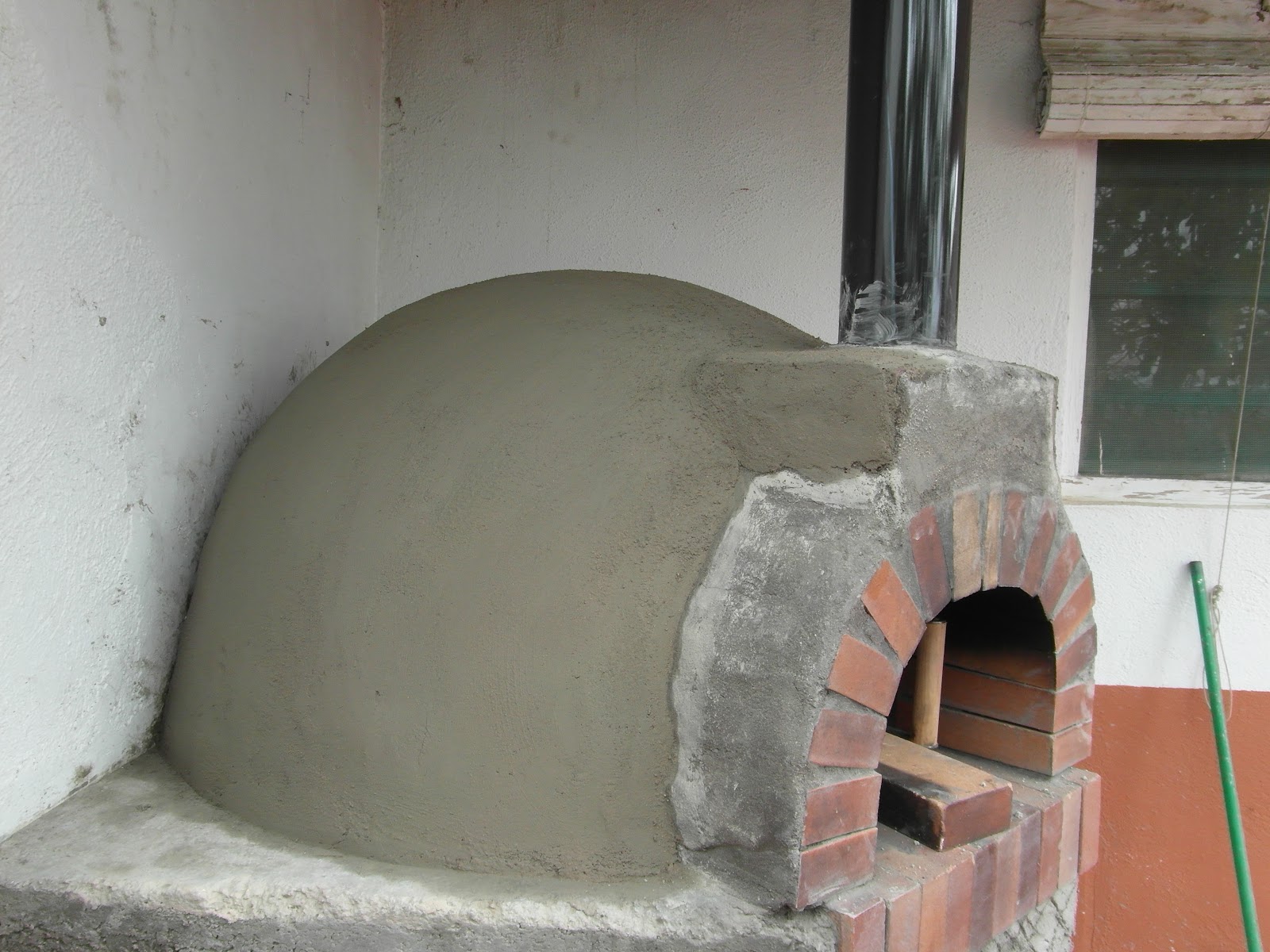
My Wood Fired Oven

I've wanted to build my own oven for many years now but never had the time, or the space before.  First I wanted to choose a spot that was close to the house.  I have a beautiful terrace which is at the front of the house and I didn't want anything blocking the view from the terrace, so in the end I found a corner, big enough to build it. 

I got information on how to build one from from the Internet , a french book I have, and I kind of amalgamated it all and just started.  My husband helped me put in the steel work and the wood to do the base but apart from that it is all my own work.


I opted for a diameter of 70cm, I then cut the circle in half to make a template for cutting the polystyrene for the dome.


The first layer of concrete for the base was 10cm deep, I then put another layer of cement and perlite for insulation of about 7cm.  Onto this I put re factory mortar and laid the refractory bricks onto this so they would give the oven floor a 10cm thickness.  The refractory bricks for the dome I cut in half, I used a cheap, electric tile cutter for this. The top of the dome was the hardest to do and I wish now I had cut the bricks a bit better, although they all locked in and stayed in place without mortar, I think in the long run I should of taken more time to cut them better.  I gave it a good covering with refractory cement.


The mouth was difficult to do, in the end I put to fire bricks on end and then put two 4cm corner pieces of iron and fitted half bricks onto it.


The mouth I made just a few centimeters bigger, so as to give the door something to sit against.


I left an opening in the mouth for the chimney.


I fitted a piece of iron in the opening for the chimney pipe to sit on.


Before advancing any further I let the cement dry for a couple of weeks and then built fires in it for a couple of weeks until I brought the temperature up to 300c.

I always think bread ovens are a bit biblical and magical.


Then I covered the dome in Rockwell insulation, fixing it all with chicken wire , which I anchored with screws into the base.  I covered this with concrete with a couple of trowels of lime mixed in to help it stick.  I made quite a dryish mix and pushed it into the mesh.  My husband said it wouldn't stick but it did.  When it had dried I covered it in cement.


I had a iron door made locally and bought a thermometer from http://www.vitcas.com/


I cooked a practice loaf in it today but I haven't got a implements for getting bread in and out of the oven and I balanced a loaf on a piece of wood and tried to slide it in the oven but I failed and it fell on a burning log.  It was a bit black and covered in ash and it tasted sublime.

I haven't added up the cost of it yet but I think it is near 500 euros.  I think it is worth it.


Sunday, 12 June 2011

Minervois Sourdough Bread.


Anyone that has tried their hand at making bread, whether it be from a natural yeast starter or bought yeast, will no the complete enthralling and compelling obsession  that it becomes.  The quest to produce the perfect loaf becomes all consuming. 

I started my first sourdough starter in my Mothers airing cupboard and after  feeding and nurturing it for over a week it eventually turned into the BLOB, growing and consuming all its path.  Namely forgotten knickers and odd socks abandoned on the copper pipes in the airing cupboard, until in the end it had to be punched into a black plastic sack and thrown out in the rubbish.  Who knows it could be living at the local tip to this day, devouring all in its path! 

My second attempt was in the Languedoc in France and this time I used Minervois red grapes at the time of the harvest in September and organic, stone ground rye flour from the neighbouring Black Mountains.  This time it was a success and I am still using it to date.  It will be 4 years old this coming September.  We've had are ups and downs but it has always bounced back.  It is like a pet that I always have to think about.  It normally comes on holiday with us as we have a camper van and I just put it in the fridge and feed it as normal.  Sorry, I am not explaining  this very well, once you have started a natural yeast starter it always has to be fed with fresh flour, usually on a weekly basis, but depending on how often you use it.  I could go into pages of explanation but you just have to get to know your starter and learn what it will tolerate or not in order to survive.

This is how I started mine.


Starter


a plastic bucket
piece of muslin
string
organic rye flour
1 bunch organic red grapes
spring water
1 kilo glass jar with plastic lid
rubber spatula (I never use metal to mix my Mother Culture)


How to go about it


Put grapes in muslin and tie up with the string
Put 500g flour and enough water in the bucket to make a thick paste and squeeze grapes into the flour and water mixture.  Leave grapes in the mixture, cover with a clean, dry tea towel.


Let it ferment at room temperature for a couple of days.  It should start to smell beery, which is what beer is - liquid bread!  The colour will be pinky grey.  Yuk but this it how it should look.  Leave it another day and then add another cup of flour and some water and squeeze grapes a bit more.  Cover and let it ferment again for 2 days.  Then throw a couple of cups away and add some more flour and mix to same consistency as before, cover and leave again for two days.  Repeat twice more throwing away and adding.  Right now it should start to take strength.  Fill a kilo jar up to 3/4 with starter and make a small hole in the lid and store in fridge.  This is now your pet and it has to breath and eat.  Every time you use it,  throw away a good half of the jar, top up with flour and water and mix and return to fridge.  If you are not going to use it for while that is okay it will go to sleep as such but you will have to bring it back up to strength by throwing away and topping up until it recovers its strength.  It is best to make bread with it two days after it has been fed.


So, now you want to make some bread.
Firstly, make sure that your Mother culture is fed and ready for action.

Day 1  Hour 1700

Sponge mixture

Ingredients

125g  wholemeal flour
125g strong bread flour
250dl room temperature water, the amount will depend on the dryness of your flour.
about a tangerine size amount of Mother culture

How to go about it

Put the two flours in a bowl and put in starter.  Mix in water with spatula until it is like a thick paste, cover with a clean tea towel and leave at room temperature for 18 to 24 hours.  It should be quite bubbly.
Don't forget to feed Mother Culture, throw a bit away if needed.  I changed my flour for feeding my culture from rye to wholemeal, this was a question of what was available and price.  It is not a problem to feed it with rye or wholemeal it will adapt but the most important thing is that it is fed and watered.

Day 2  Hour 1700

Ingredients

1250g strong bread flour
3 teaspoons of salt
3 teaspoons of sugar or honey
3 tablespoons olive oil
400g of the sponge mixture
About 300dl tepid water

How to go about it

Mix all ingredients together and knead for 15 minutes.  It can be made in a food mixer but you might have to make it in two lots.  The water content will depend on your flour but the wetter the dough the better.  Put the dough into an oiled bowl and turn over so it is covered in oil.  Put cling film on top of the dough and leaver out for 1 hour and then put in the fridge overnight.


Day 3 Hour 0900

Take dough out of the fridge and let sit for an hour.  Take out of the bowl and split in two, lightly shape into two round loaves.  Dust with flour and place each loaf on an floured baking tray, cover each loaf with a clean tea towel and let prove for 4 hours. 
Preheat the oven 40 minutes before to 225°c.  Cook each loaf one at a time and slash just before it is put into the oven and spray with water.  Bake for 35 minutes.